
Durability at Kona: is the marathon won or lost on the bike?
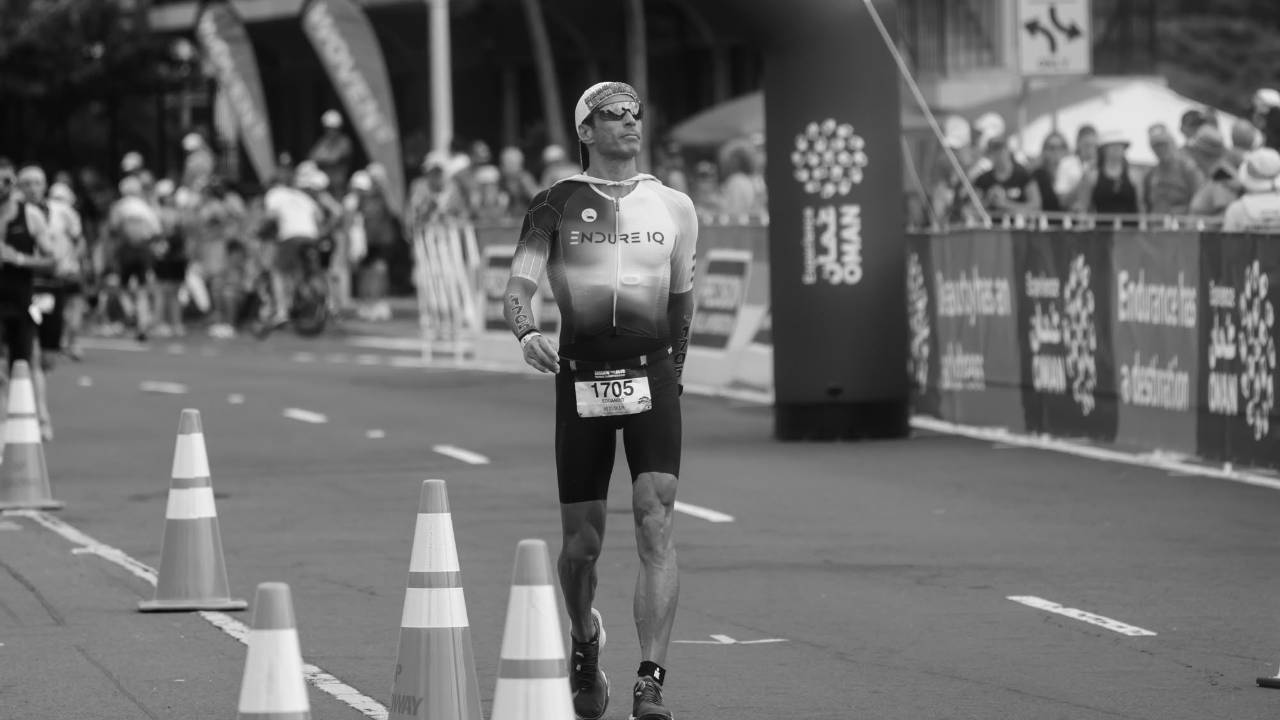
Anyone who has raced Kona knows the moment. You get off the bike on the Queen K and there's still a marathon to go, out to the Energy Lab and back. Which raises a question I keep coming back to: if you're already fading at the back end of the bike, are you automatically less durable on the run? To explore it, I analysed the race files of four athletes who raced Kona in 2026 (Athletes B to E), plus earlier Kona races where we had them.
My 2018 race: a rock steady bike
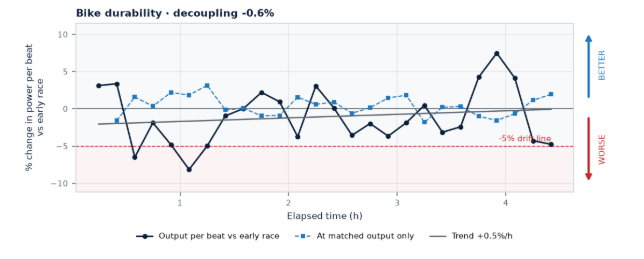
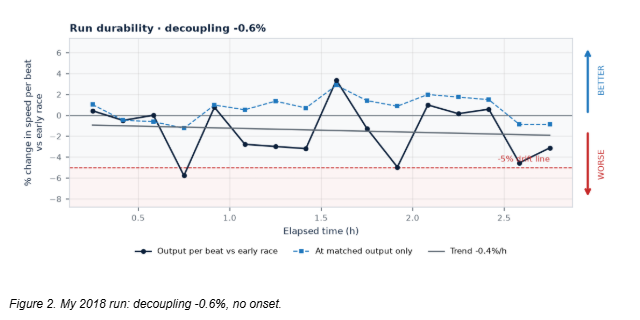
My own 2018 race shows what holding the back end of the bike can look like. My bike decoupling was -0.6%, with no drift onset at all, and 259 W normalised power (FTP then was 370 w, so a easy bike). My last quarter power was 6.6% higher than the first (242 to 258 W). Then came a 2:50:56 marathon, with -0.6% run decoupling. Race conditions are also undeniably playing a big part.
What is durability?
In 2021 we defined durability as the time of onset and magnitude of deterioration in physiological characteristics duri...
Jan Van Berkel - The Fat Adapted Healthy Athlete: Visceral Fat and It's Relationship to Health and Performance

Heat Training to Improve Exercise Performance in Cool Conditions
One topic that has received increasing attention in the scientific and endurance sport community over the last few years is training under environmental heat stress. The benefits of training in the heat in preparation for a competition in a hot environment is well-established (3, 23). That process is called heat acclimatisation (or acclimation when performed in an artificial hot environment like a heat chamber), and is an effective means of improving an athlete’s thermoregulatory capabilities in order to tolerate the stress associated with the dual stresses of competitive work outputs and high environmental stress. That is not what this blog is about. Interested readers are directed to our course dedicated to preparing for long-distance triathlon competitions in hot environments (LDT 103).
In this blog we are instead concerned with whether training under environmental heat stress can be used as an additional stressor in order to promote endurance training adaptations relevant to perfo...
VIDEO: Low Carb Triathlon Training - Latest Research Findings from Dr Dan Plews
In this video, Dr Dan Plews gives an overview of his latest research (12 week very low carbohydrate (<50g) sports performance study) involving low carbohydrate diets (<50g) in recreationally trained athletes. This study is unique, as to our knowledge, it's one of the longest Low Carb High Fat (LCHF) studies conducted.
Watch the video to get Dan's take on the Low Carb Triathlon training needed, and understand what this data means for those LCHF athletes training for Long Distance Triathlon!
Click here for more information on our online course Endure IQ LDT101: The Practical Application of Low Carbohydrate Performance for Long Distance Triathlon.